
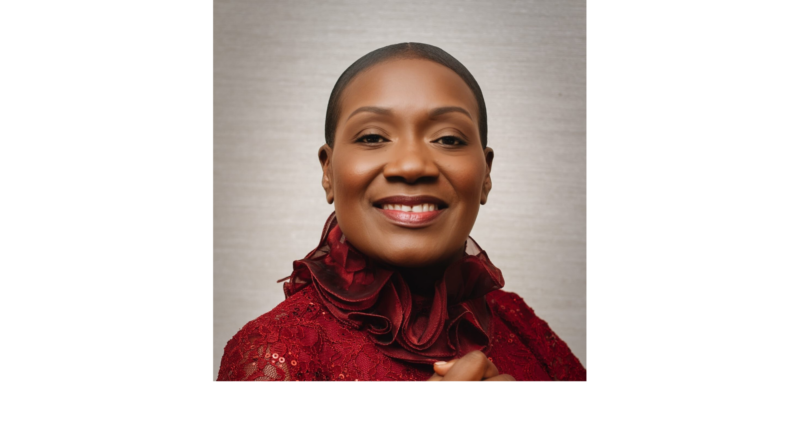
In Honor of Social Work Month: Meet NYCHA Social Worker Magalie Joseph
For Magalie Joseph, social work begins with something simple but powerful: listening.
“In social work, everything begins with listening,” Ms. Joseph said. “When you truly hear someone’s story — where they come from, what they’re facing — you begin to understand what they need. Only then can you help connect them to the right support.”
Most days find Ms. Joseph out in the field — meeting NYCHA residents where they live, learning about their situations, and helping them gain access to services that can make their lives better.
Originally from Haiti, Ms. Joseph grew up surrounded by a close-knit family and community. After completing her early education, she moved to the United States and continued her studies, eventually earning a bachelor’s degree in social work and later a master’s degree as well.
Her career has included work with Adult Protective Services and in hospital settings. At NYCHA, Ms. Joseph has spent roughly a decade helping residents navigate difficult circumstances and connect with the assistance they need.
Most of that work happens, she said, in the field.
“Usually, we receive a referral from property management,” Ms. Joseph said. “They might notice a situation where a resident needs help and send us the basic information. At that point, we reach out and schedule a visit.”
Those visits are where the real work begins.
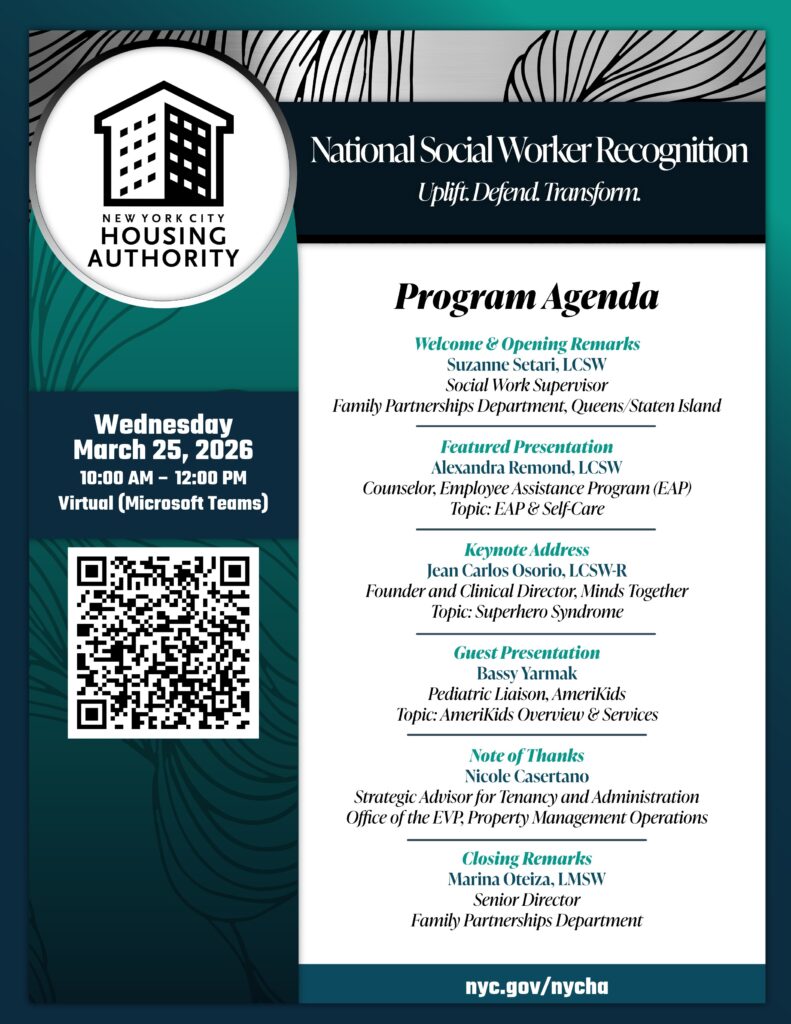
Don’t miss the National Social Worker Recognition event this coming Wednesday, March 25 at 10am!
Scan the QR code above to join in.
During home visits, Ms. Joseph conducts detailed assessments — often referred to as “biopsychosocial assessments” — that examine a resident’s health, environment, family dynamics, and broader needs. Very often, the situation she finds is much more complex and subtle than any first report might indicate.
“Sometimes you go to see one person,” she said, “but when you arrive, you immediately can see that the situation involves more, sometimes much more. There may be children in the household, or health issues, or other challenges, or all of the above. You have to see the whole picture. To see it, you have to be present and look, as deeply as you can.”
Once she understands the deeper situation, Ms. Joseph works to connect residents with the services they need — whether it’s medical care, mental health support, community programs, or other resources.
“Our role is to be a bridge,” Ms. Joseph said. “Residents may be facing medical issues, housing challenges, or family stress — and all of those can be helped by professional attention. But the first professional needed has to join them where they are and let them know that they are cared for, that they are not alone. Then we can help connect them with the services and resources that will continue helping to make that difference.”
NYCHA social work professionals like Ms. Joseph typically work with residents over a relatively short period — often two to three months — helping to stabilize their home situations and ensure that the right support systems are put into place.
“The clients make time for us,” she said. “And we work with them, on their schedules of course, too.”
Interestingly, Ms. Joseph’s first dream of how to make a meaningful contribution through her work was not via social work at all.
“When I was younger, I wanted to become an actress,” she said.
Life, however, took Magalie Joseph toward other opportunities for service. Over time, she realized that the same curiosity about people she brought to her stagecraft — and the same desire to understand their stories — were exactly what social work required as well.
“Social work is also about understanding people by looking deeply into the complex challenges they face,” she said. “It helped me understand why I love doing this work.”


